Top Rated Guide
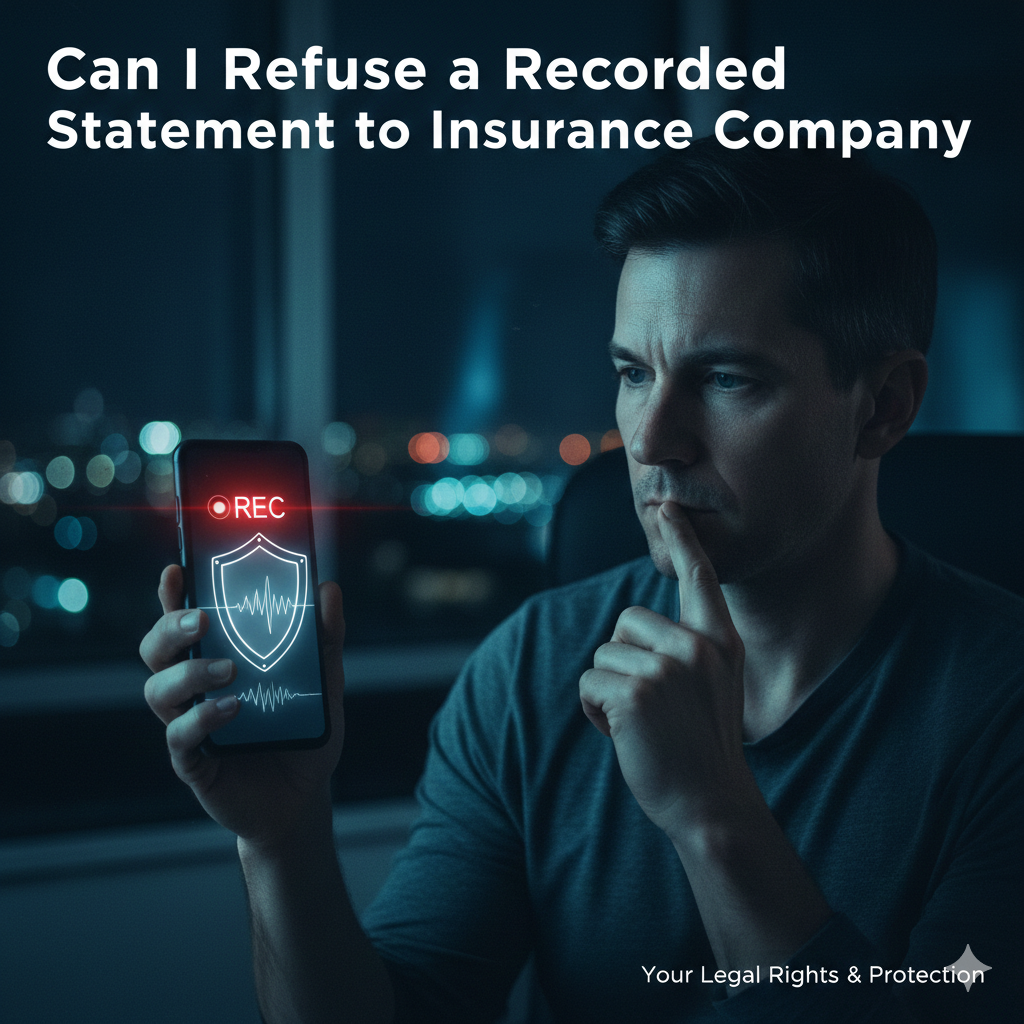
Can I Refuse a Recorded Statement to Insurance? Your Legal Rights
Wondering "can I refuse a recorded statement to an insurance company?" Learn when it's okay to say no, the risks of being recorded, and how to protect your claim.
Can I Refuse a Recorded Statement to an Insurance Company? What You Need to Know
After a car accident, the phone calls start almost immediately. One of the first things an insurance adjuster will ask is: "Can we get a recorded statement to help process your claim?"
It sounds like a helpful, standard request. However, before you say yes, you need to understand your rights. In many cases, giving a recorded statement can do more harm than good.
The Short Answer: It Depends Who’s Asking
Whether you can—or should—refuse a recorded statement depends entirely on which insurance company is calling you.
1. The Other Party’s Insurance (Third-Party)
Can you refuse? YES.
You have no legal or contractual obligation to give a recorded statement to the other driver's insurance company. Their goal is to find reasons to shift the blame to you or minimize your injuries. You can politely decline and tell them you will provide a written statement or have your attorney contact them.
2. Your Own Insurance Company (First-Party)
Can you refuse? PROBABLY NOT (But you can delay).
Most insurance policies have a "Duty to Cooperate" clause. This means you must provide information to help them investigate the claim. If you refuse entirely, they may have grounds to deny your claim or cancel your policy. However, "cooperation" does not mean you have to be recorded right now. You have the right to wait until you are calm, prepared, and have spoken with a lawyer.
3 Reasons to Be Cautious of Recorded Statements
Insurance adjusters are highly trained professionals. They use recorded statements to "lock you in" to a version of events before you have all the facts.
-
The "I'm Fine" Trap: If the adjuster asks, "How are you doing today?" and you reflexively say, "I'm fine," they can use that recording later to argue that your injuries aren't serious.
-
Adrenaline Masks Pain: Immediately after an accident, you may not feel the full extent of a back or neck injury. If you give a statement today saying you aren't hurt, but pain emerges tomorrow, they will use your recording to challenge your credibility.
-
Inconsistent Details: Small errors (like guessing your speed at 35 mph when it was actually 32 mph) can be framed as "dishonesty" later in the case.
How to Handle the Call Like a Pro
If an adjuster calls you, follow these steps to protect your claim:
1. Identify the Caller
Ask for the adjuster’s name, the company they represent, and the claim number. Confirm if they represent you or the other driver.
2. Decline the Recording Politely
If you aren't ready, use this script:
"I am happy to cooperate with the investigation, but I am not comfortable giving a recorded statement at this time. I would prefer to provide a written statement or have my attorney contact you."
3. Stick to the Facts
If you do speak with them, avoid speculation. If you don't know the answer to a question (like "How many feet away was the car?"), simply say, "I don't know" or "I'm not sure." Never guess.
Recorded Statement vs. Written Statement
| Feature | Recorded Statement | Written Statement |
| Pressure | High (Real-time questions) | Low (Time to think) |
| Accuracy | Prone to verbal slips | Highly accurate |
| Legal Risk | High (Hard to "undo" words) | Lower (Can be reviewed by a lawyer) |
Conclusion
So, can you refuse a recorded statement to an insurance company? If it’s the other driver’s insurer, the answer is a firm yes. If it’s your own, you must cooperate, but you should do so on your own terms—ideally with legal advice.
Protecting your rights early on is the best way to ensure you receive the full compensation you deserve.