Top Rated Guide
how much does a dental bridge cost without insurance
Losing a tooth can affect not only your smile but also your ability to chew and speak properly. A dental bridge is a popular and effective solution for replacing a missing tooth, bridging the gap with artificial teeth. But a major question for many people in the USA is: How much does a dental bridge cost without insurance?
Let's break down everything you need to know about the cost of a dental bridge without insurance, the factors that influence the price, and how you can make it more affordable.
What is a Dental Bridge?
A dental bridge is a custom-made restoration that uses existing teeth or dental implants on either side of a missing tooth (or teeth) as supports, with artificial teeth (pontics) spanning the gap. They are durable, realistic-looking, and can significantly restore your oral health and confidence.
Average Dental Bridge Cost Without Insurance (By Type)
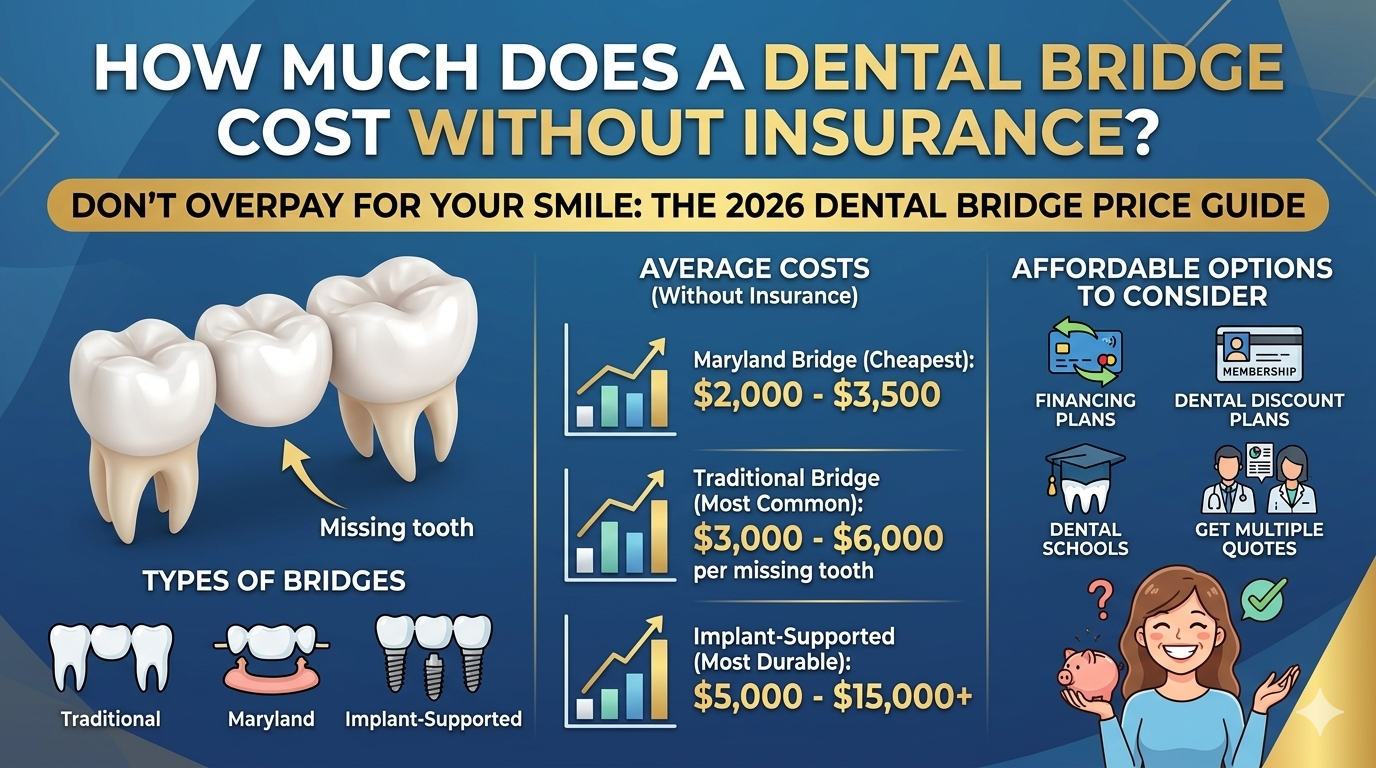
The cost of a dental bridge without insurance in the USA can vary considerably. It’s important to understand the different types of bridges, as they directly impact the price. Here's a general breakdown of the average costs (without insurance):
1. Traditional Dental Bridge Cost
This is the most common type. It involves creating a crown for the teeth on either side of the gap, with the pontic (artificial tooth) in between.
-
Average Cost (Per Pontic): $1,500 – $4,500
(Note: This price is usually per artificial tooth replaced. So a 3-unit bridge, replacing one tooth and anchoring to two, could be in the range of $4,500 - $13,500 or more.)
2. Cantilever Dental Bridge Cost
This type is used when there are adjacent teeth on only one side of the missing tooth or teeth. It is less common but can be suitable for specific situations.
-
Average Cost (Per Pontic): $1,500 – $4,000
3. Maryland Bonded Dental Bridge Cost
This type, often used for front teeth, utilizes metal or porcelain "wings" bonded to the back of the adjacent teeth to hold the pontic in place. It requires minimal preparation of the surrounding teeth.
-
Average Cost (Per Pontic): $1,000 – $2,500
4. Implant-Supported Dental Bridge Cost
This is the most expensive option, as it involves surgically placing dental implants to act as supports for the bridge. It’s ideal for replacing multiple missing teeth or if the adjacent teeth aren't strong enough.
-
Average Cost (For a 3-unit bridge with 2 implants): $5,000 – $15,000+
(The cost of this option includes the price of the implants themselves, the abutments, the bridge, and the surgical procedures.)
Factors That Influence Dental Bridge Cost Without Insurance
Why is there such a wide range in prices? Several factors beyond the type of bridge will affect the final cost of your dental bridge without insurance:
-
Material: Porcelain or porcelain-fused-to-metal bridges are common and less expensive than all-ceramic or zirconia bridges, which are highly aesthetic and durable but cost more.
-
Location: Dental care costs vary by region in the USA. Practices in major metropolitan areas generally charge more than those in smaller cities or rural towns.
-
Dentist’s Experience and Reputation: A more experienced or specialized dentist (like a prosthodontist) may charge higher fees.
-
Complexity of the Case: The number of teeth being replaced, the condition of your remaining teeth, and the complexity of the design all play a role.
-
Preparation Needed: If you require additional procedures like root canals, gum disease treatment, or tooth extractions before the bridge can be placed, the overall cost will increase.
-
Lab Fees: A significant portion of the cost covers the specialized dental laboratory that custom-makes your bridge. High-quality labs will charge more.
How to Make a Dental Bridge More Affordable Without Insurance
A dental bridge can be a significant investment, but there are ways to manage the cost without insurance. Here are some strategies:
1. Discuss Financing Options: Many dental practices offer internal financing or work with third-party companies like CareCredit to allow you to pay over time with monthly installments. Some may even have no-interest or low-interest plans.
2. Explore Dental Discount Plans: These are memberships where you pay an annual fee to receive pre-negotiated discounts on dental services at a network of dentists. They are not insurance but can offer significant savings.
3. Look into Dental Schools: Dental schools often provide high-quality dental care at a significantly reduced rate, performed by dental students under the close supervision of experienced dentists.
4. Ask for a Cash Discount: Some dentists offer a discount if you pay in full with cash or a credit card at the time of service.
5. Get a Second Opinion: Get quotes from multiple dentists to compare prices and find the most cost-effective option for your needs.
6. Prioritize Basic Oral Health: Maintaining good oral hygiene to avoid complex dental work and keeping your remaining teeth healthy can save you money in the long run.
Conclusion: Weighing Your Options
A dental bridge is a great option for restoring your smile and oral function, but the dental bridge cost without insurance can be a barrier. By understanding the average costs, the factors involved, and exploring alternative financing and payment options, you can make this essential dental care more accessible and affordable.